
Witnessing the Great Migration is not merely a sightseeing excursion; it is an immersion into one of the oldest and most complex survival dramas on Earth. For the uninitiated, the migration can look like chaos. However, for the informed traveler, it is a highly synchronized biological machine driven by rainfall, soil chemistry, and ancient instinct.
At Mamis Tours & Travels, we believe that the best safari experience belongs to the traveler who understands the “why” behind the movement. Here is a guide to wildebeest facts, behavior, and migration dynamics that will transform your perspective from a passive observer to an informed explorer.
The Biology of Movement: Why They Never Stop
The blue wildebeest (Connochaetes taurinus) is often mischaracterized as a comical or unintelligent animal.
1. The Phosphorus Chase
One of the most critical wildebeest migration facts is that the movement is not random wandering.
Wildebeests are hypersensitive to the mineral content in grass, specifically phosphorus and calcium. As the rains shift, the mineral concentrations in the grass change. The herd moves not just for water, but to graze on high-phosphorus soils necessary for lactation and skeletal growth.
2. The “Swarm Intelligence”
Wildebeests do not have a single leader. Instead, they operate using “swarm intelligence.” This is a collective decision-making process where the herd reacts to the movements of nearest neighbors. If a few individuals sense rain or danger and change direction, the information ripples through the herd almost instantly. This allows them to react to threats like lions or leopards with fluid, synchronized evasion.
3. The Zebra Alliance
You will rarely see a wildebeest herd without zebras nearby. This is not accidental; it is a strategic alliance.
- Dietary Symbiosis: Zebras possess a digestive system that handles tough, long grass stems. They mow down the tall grass, exposing the nutritious, shorter shoots underneath that wildebeests prefer.

- Sensory Complementation: Zebras have superior eyesight and memory for migration routes, while wildebeests possess an acute sense of smell and hearing (and are believed to detect rain from up to 50 kilometers away). Together, they form a robust security system against predators.
Decoding the Migration Cycle
Understanding the life cycle of the herd is essential for planning your Africa wildebeest experience. The migration is a continuous circle, but the experience varies drastically depending on when you travel.
The Calving Season (January – March)
This occurs in the Southern Serengeti (Ndutu plains). In a synchronized biological feat, approximately 8,000 calves are born daily over a three-week period.
- Survival Fact: A wildebeest calf can stand within minutes of birth and run with the herd within an hour. This rapid development is crucial, as the calving season attracts the highest concentration of predators in Africa.
- Viewer Insight: This is the best time to see cheetahs and lions hunting, but also to witness the tender maternal instincts of the herd.
The Rut (May – June)
As the herd moves north toward the Western Corridor, the mating season (the rut) begins. This is a high-octane period where bulls establish temporary territories and spar violently to attract females. The noise is deafening—a constant chorus of grunts and moans—and the energy is frantic.
The River Crossings (July – October)
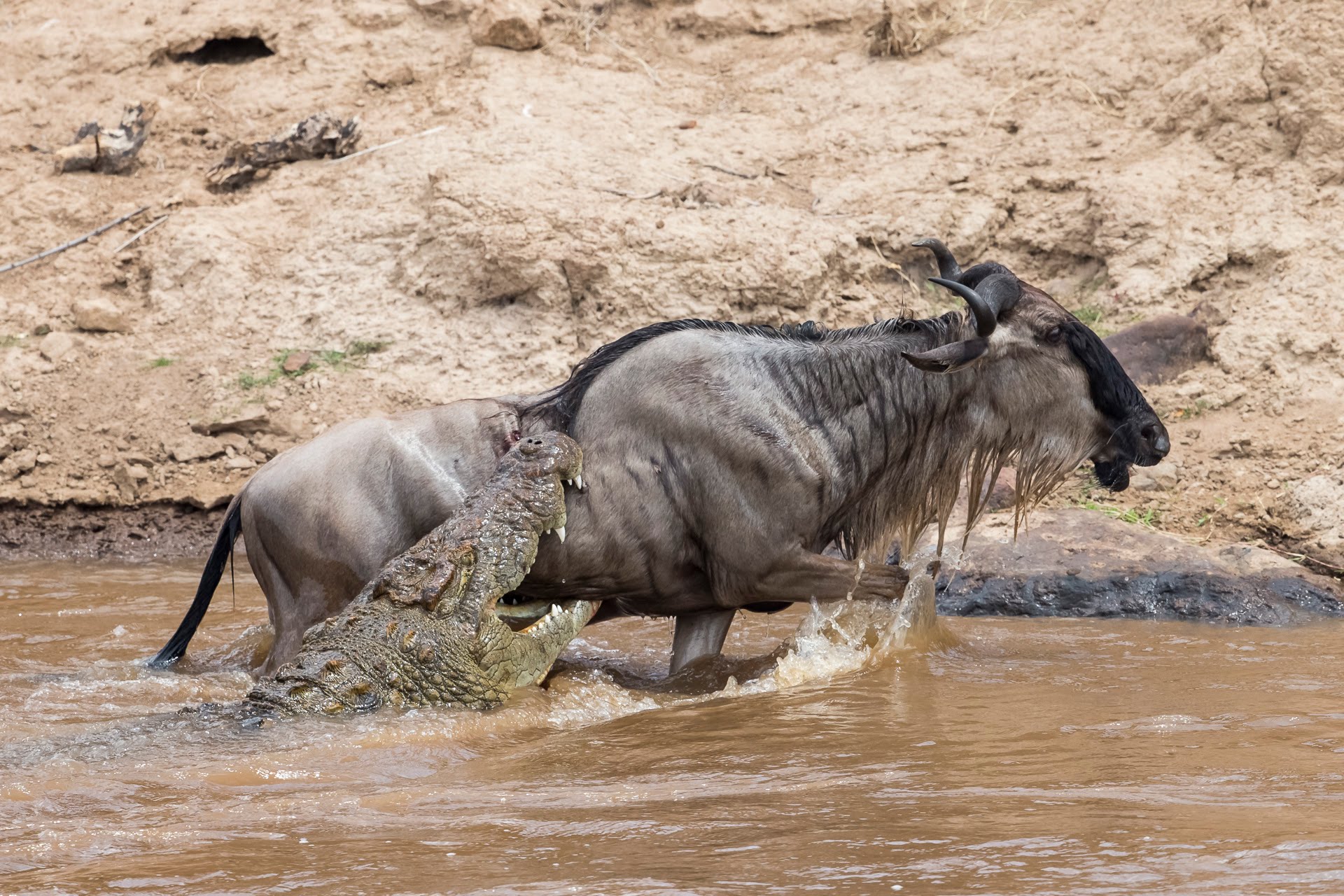
This is the most famous and dangerous chapter. The herds must cross the Grumeti and Mara Rivers to reach the grazing lands of the Masai Mara. This is where wildebeest safari tips regarding patience become vital (more on this below).
River Crossings: The Theater of Chaos
The river crossings are the most sought-after events for photographers, but they are also the most misunderstood.

Why It Is Risky and Unpredictable
The crossings are not a daily scheduled event. The herd may gather at the riverbank for days, building in numbers, waiting for a trigger.
- The Trigger: Often, it takes a single brave (or pushed) individual to leap into the water to break the stalemate. Once the first one goes, the “swarm” follows blindly.
- The Dangers: Beyond the massive Nile crocodiles lying in wait, the physical terrain poses a threat. Steep banks, slippery rocks, and strong currents can lead to drownings or tramplings.
Viewing Strategy
At Mamis Tours & Travels, our guides are trained to read the herd’s body language. If vehicles approach too quickly or block the exit route on the opposite bank, the herd will spook and retreat. The key to witnessing a crossing is extreme patience and ethical positioning. We ensure we are in position without interfering with the animals’ decision-making process.
Ecological Importance: The Architects of the Plains
When looking for things to know before wildebeest migration, understand that these animals are the “lawnmowers” of the ecosystem.
- Keystone Species: Without the wildebeest, the Serengeti would look completely different. By grazing the grass short, they reduce the fuel load for wildfires, allowing trees and bushes to regenerate.
- Fertilization: The herd produces hundreds of tons of dung daily. This recycles nutrients back into the soil, stimulating the growth of the very grass they rely on.
- Predator Support: The migration supports the entire food web. The abundance of wildebeest allows lion, hyena, and leopard populations to thrive.
However, climate change and human encroachment are threatening this balance. Changes in rainfall patterns can disrupt the timing of the grass growth, leading to mass starvation events or erratic migration patterns.
Wildebeest Viewing Tips: Actionable Advice
To get the most out of your safari, you need to prepare for the reality of the bush. Here are expert wildebeest viewing tips from the team at Mamis Tours & Travels.
1. Timing is Everything (But Nature is Flexible)
While we have general calendars for the migration, the herd follows the rain, not a schedule.
- Pro Tip: Don’t fixate on a specific date. Rely on an operator like Mamis Tours & Travels that communicates with rangers in real-time to locate the densest parts of the herd.
2. Respect the “Waiting Game”
If you are at the Mara River hoping for a crossing, bring a book and plenty of water. You might wait four hours for 20 minutes of adrenaline. Do not pressure your guide to drive closer. If the lead wildebeest senses a blockade or threat, they will turn back, and you will miss the spectacle entirely.
3. Look for the “Outliers”
While the massive herd is impressive, look at the edges. This is where the drama happens. Predators usually target the flanks of the herd. Watch for isolated animals or mothers separated from calves; this is where the emotional and raw survival stories unfold.
4. Prepare for Dust and Flies
1.5 million animals kick up an immense amount of dust.
- Gear Tip: Protect your camera gear with dust covers. Bring a scarf or bandana for your face. However, embrace the dust for photography—backlit dust at sunset creates some of the most atmospheric safari images possible.
Surprising Wildebeest Facts
To truly appreciate what you are seeing, consider these record-breaking and unique attributes:
- Endurance Swimmers: Despite being land animals, wildebeests are strong swimmers. They have been known to cross lakes and wide rivers, driven purely by the scent of rain on the other side.
- The “Fool” of the Bush: The local name for the wildebeest is Gnu (derived from the sound they make). Folklore often describes them as being assembled from the spare parts of other animals (the head of an ox, the mane of a horse, the gait of an antelope).
- Speed: They may look ungainly, but a wildebeest can hit speeds of 80 km/h (50 mph), making them faster than lions over long distances.
Conclusion: Why This Knowledge Matters
The Great Migration is not a zoo exhibit; it is a dynamic, dangerous, and delicate natural phenomenon. Knowing the biology behind the movement, the risks of the river crossings, and the ecological weight of the herd changes how you see the Serengeti.
Ready to plan your Trip?
Experience the Epic Wildebeest Migration

When you understand that the calf running past your vehicle was born only hours ago, or that the herd waiting at the river is calculating a life-or-death risk based on instinct, the experience becomes profound.
Are you ready to witness the greatest show on Earth?
At Mamis Tours & Travels, we don’t just drive you to the animals; we guide you through the story of their survival. Contact us today to plan a migration safari that puts you in the right place, at the right time, with the right knowledge. Content sourced from : Soprano.com